Iran war: Trump's most expensive economic mistake for Europe
TEHRAN- The aggression of the American-Zionist coalition against the Iranian nation has not only transformed the military and political equations of the region but has also had deep and widespread effects on the economies of various countries, including the major economic powers in Europe that were considered Trump's allies.
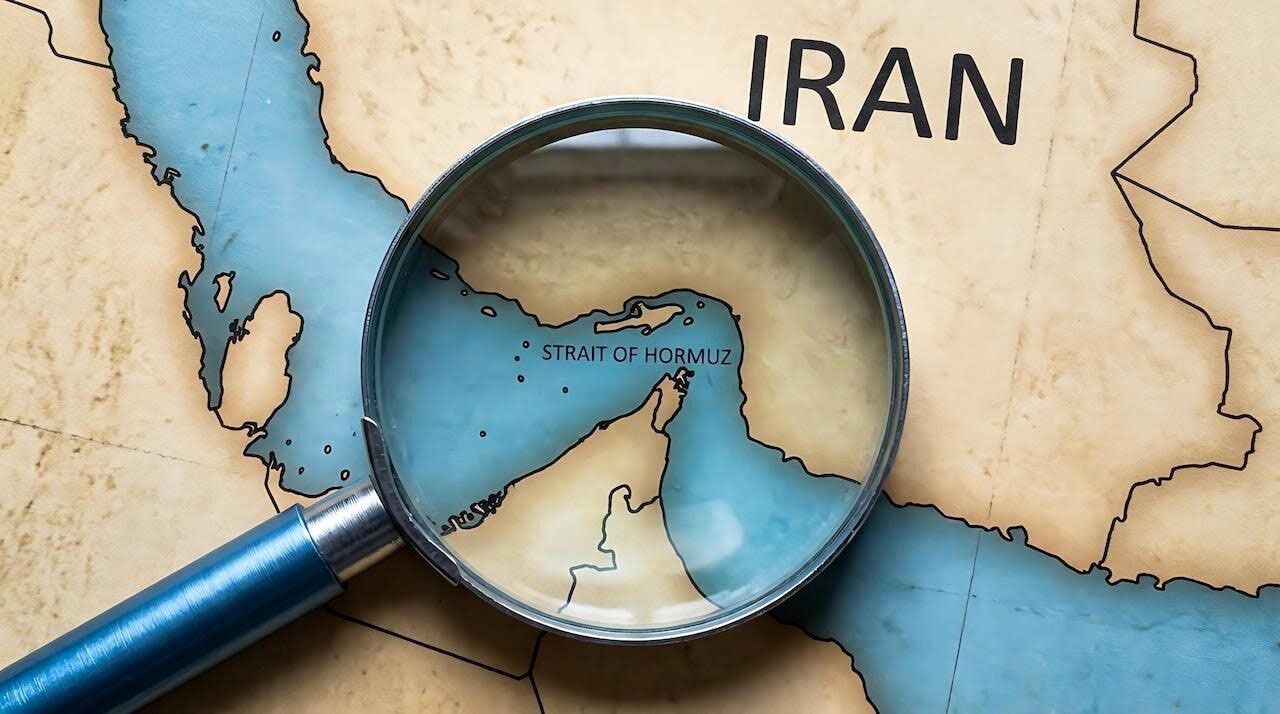
According to an IRNA report, two months after the US and Zionist regime's military aggression against Iran, the effects and consequences of this aggression are increasingly impacting people's lives worldwide. Escalating recession and inflation are the key indicators of these developments. What distinguishes this war from previous conflicts is the closure of the Strait of Hormuz, the vital artery of global energy, which has disrupted global supply chains and halved economic growth in many countries, especially in Europe.
In such circumstances, the most important question is: What economic costs has this imposed war inflicted on the world's nations, and when might an exit from this crisis be possible?
While it was initially assumed that the effects of the war would be limited to Iran or the West Asia, recent statements by European officials have revealed the reality. The latest remarks from German authorities indicate that this European country has suffered the greatest blow from the conflict. Lars Klingbeil, Germany's Finance Minister, recently revealed that Trump's war with Iran has halved Germany's economic growth and sharply increased fuel and energy costs, despite Berlin not being involved in the war.
This bitter reality shows that the war against Iran is not a regional crisis but has targeted Germany’s energy supply chains and industry. Furthermore, Germany's automotive industry, already struggling with the energy crisis caused by the Ukraine war, is now paralyzed by rising energy prices and disruptions in the supply chain of parts through the Strait of Hormuz.
It is clear that the main culprits are the United States and Israel, who have disrupted global energy stability by starting the war against Iran. Germany, which considers itself innocent and unrelated to this war, has effectively become a hostage to White House policies.
Katharina Reich, Germany's Federal Minister of Economics from the conservative Christian Democratic Union (CDU), had only bad news to deliver in Berlin. She expects the war in the Persian Gulf to limit Germany's economic growth to just half a percent this year.
Economic problems in Europe are not limited to Germany. Other countries, such as Italy, have also sharply reduced their growth forecasts. Giorgia Meloni, Italy's Prime Minister, announced last week: "My current priority is to contain inflationary pressures on prices, especially energy, given the impact of the American war against Iran. In the current international crisis we face, controlling prices and energy, preventing the inflationary impact that clearly destroys GDP growth, must be a priority."
In contrast to Germany and Italy, Spain's economy has performed surprisingly well. According to data published by Spain's National Statistics Institute (INE), the country's GDP grew by 0.6% in the first quarter of this year compared to the previous quarter, reaching 2.7% on an annual basis. In this regard, Carlos Cuerpo, Spain's Economy Minister, stated in an interview that the Spanish economy maintained its growth rate at the beginning of the year marked by the war in Iran.
He attributed this success to investment in renewable energy (with a 55% share in the energy mix), diversification of oil import sources (the US and Africa instead of the Persian Gulf), and a €5 billion support package for households and businesses. However, this growth did not come without cost. Spain's inflation rate rose amid the war, and although it fell to 3.2% in April, fuel prices remained high. Spain's central bank had previously warned of significant economic slowdown if the war continued.
In this context, Ursula von der Leyen, President of the European Commission, emphasized last week that the consequences of the conflict in West Asia could last for months or even years. She referred to the recent energy crisis as the second major energy crisis within a short period of four years and proposed three sets of measures to overcome the energy crisis in Europe: first, increasing coordination at the European level; second, protecting consumers and businesses; and third, systematically modernizing energy consumption.
Strait of Hormuz: World economy’s chokepoint
According to political and economic experts, one of Iran's winning cards in this war has been closing the Strait of Hormuz. This began with managing vessel traffic based on international conventions under conflict and war conditions, then escalated to a complete closure due to the US naval blockade of Iran.
This narrow waterway between Iran and Oman naturally carries one-fifth of the world's crude oil and liquefied natural gas. The World Bank has warned that the war in the West Asia has caused the largest oil supply reduction in history, and energy prices will rise by an average of about one-quarter this year.
Analysts at Oxford Economics believe that returning oil exports from war zones to pre-war levels is a very time-consuming process. For example, three years after the 1991 Persian Gulf War, oil production in Iraq and Kuwait was still more than 60% below pre-war levels.
With the closure of the Strait of Hormuz, ships must take longer, more costly routes to transport oil, further fueling price increases. The World Bank forecasts that it will take at least six months for maritime transport through the Strait of Hormuz to return to normal, during which time the global economy will grapple with an unprecedented shock.
How long will economic recovery take?
The key question on many analysts' minds is when the economies of warring countries (and even third-party nations like Germany) can return to normal. According to Oxford Economics, inflation caused by the Iran war will likely disappear completely two to three years after the conflict ends. However, even the most optimistic scenarios suggest that even with an immediate ceasefire, the psychological effects and logistical disruptions will continue to affect Germany and other European economies for at least another year.
Regarding a return to economic growth, past war experiences show that countries directly involved in the war (like Iran itself) need five-year plans to resolve economic problems and rebuild infrastructure. However, countries harmed only by the energy shock could recover within 18 to 24 months, provided the war is not prolonged.
It must be said that the origin of all these crises is the illegal US and Israeli military action against Iran. Trump, who thought a short military campaign could force Iran to surrender, now sees his European allies' economies collapsing. Even the Arab countries of the region have been trapped in this quagmire. The UAE, despite leaving OPEC, continues to suffer from the closure of the Strait of Hormuz. Saudi Arabia, despite its vast oil reserves, cannot export via an alternative route at a reasonable cost.
Interestingly, the Zionist regime itself has not been immune from this war. Israeli economic analysts have reported that war costs and the halt of gas exports from joint fields with the region have made the regime's economy negative. The US, despite Trump's triumphalist propaganda, is facing a new wave of inflation. Wall Street analysts predict that inflation in the US will exceed 4%, even assuming a ceasefire.
MA
Leave a Comment